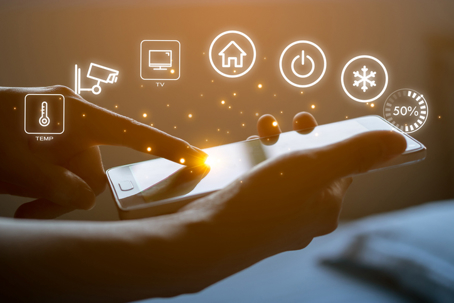
Smart locks that change in the middle of the night. Cameras that turn back on after being disabled. Thermostats adjusted remotely at odd hours.
For many individuals navigating domestic violence situations, these are not technical glitches. Electronic intrusions are tools of coercive control and surveillance now actionable as Domestic Violence (DV) abuse.
As smart-home technology becomes more common, courts are increasingly seeing cases where abuse extends beyond physical presence into digital access and remote control. Beginning in 2026, California law expands DV order protections into the digital age or the Internet of Things (IOT) space.
Senate Bill 50 (SB 50) introduces new protections for individuals experiencing technology-enabled IOT abuse and clarifies how this conduct fits into the domestic violence restraining order (DVRO) framework.
Why Smart-Home Abuse Is Different
Traditional domestic violence cases often focus on physical conduct, threats, or direct communication. Smart-home harassment operates differently.
Control can be exercised remotely, repeatedly, and sometimes invisibly. A person may:
- lock or unlock doors without warning
- monitor movement through cameras, doorbells, smart watches, and vehicles
- disrupt sleep by manipulating lights, alarms, or temperature
- interfere with daily routines or parenting time
In many cases, the conduct is subtle but persistent. The impact is the same: loss of control, heightened anxiety, and disruption of daily life.
How SB 50 Changes California Domestic Violence Law
SB 50 makes two important 2026 updates to California law that directly affect these situations.
1. Smart-Home Abuse Fits Within “Disturbing the Peace”
California courts can issue restraining orders based on conduct that “disturbs the peace” of another person. This has long included harassment, threats, and certain forms of coercive behavior.
SB 50 clarifies that this concept includes the misuse of connected devices.
In practical terms, this means that behavior involving smart-home systems, accounts, or devices can be more clearly presented as part of a domestic violence claim. Courts still evaluate each case individually, but the law now reflects how modern control can occur.
2. A New Path to Cut Off Device Access
SB 50 also creates a separate process that allows individuals to request removal of an abuser’s access to connected devices or accounts.
This is not a court order. A formal request submitted directly to the company that manages the device or platform.
If the request meets statutory requirements, the company must act within a short timeframe, by either disabling access or providing a method to reset the device.
For many individuals, this creates a faster way to regain control of their environment while a DVRO case is pending.
How SB 50 Fits Into the DVRO Process
SB 50 does not replace the traditional restraining order process. It works alongside it.
A domestic violence restraining order remains the primary legal tool for:
- establishing enforceable boundaries
- addressing safety concerns
- creating custody and visitation structures
- restricting contact and behavior
What SB 50 adds is clarity and speed.
It allows individuals to:
- more clearly describe technology-based abuse within a DVRO request, and
- take immediate steps to limit access to connected devices without waiting for a full court hearing
In many cases, both approaches are used together.
What Courts Look for in Smart-Home Abuse Cases
As with any restraining order request, the court focuses on clarity and credibility.
Judges are not evaluating technology itself. They are evaluating conduct.
In these cases, the most effective presentations tend to show:
- a clear pattern of behavior over time
- specific examples tied to dates and events
- the impact of that behavior on safety, sleep, parenting, or daily life
The goal is not to overwhelm the court with technical data, but to explain what happened and why it matters.
Documenting Technology-Enabled Abuse
Many people assume that proving smart-home harassment evidence requires technical expertise. It does not.
What matters is documenting what you can safely access and organizing it clearly.
Helpful documentation may include:
- screenshots of device activity or account access
- alerts showing logins, changes, or new devices
- a short timeline of incidents
- photos showing device placement or setup
- communications or messages related to the conduct
In most cases, a small number of clear, well-organized exhibits is more effective than a large volume of raw data.
Common Pitfalls to Avoid
In cases involving connected devices, a few issues arise frequently:
- resetting devices before preserving evidence
- continuing to use accounts that the other person can access
- presenting disorganized or excessive technical data
- leaving technology-based conduct out of the restraining order request
These issues can make it harder for the court to understand what is happening and why protection is necessary.
When Legal Guidance Becomes Important
Some individuals can begin the restraining order process on their own. However, situations involving smart-home access often raise additional concerns.
Legal guidance may be particularly important when:
- Device access is tied to shared property or accounts.
- Child custody or parenting time is affected.
- The other party disputes control or ownership of devices.
- There is a broader family law case, such as divorce.
- There is concern about escalation or retaliation.
These cases often require both legal strategy and a clear understanding of how technology intersects with control and access.
At Feinberg & Waller, we approach domestic violence matters with a focus on clarity, preparation, and long-term outcomes, particularly where custody, safety, and complex dynamics intersect.
The Bottom Line
Technology has changed how control can be exercised in domestic relationships. California law is beginning to catch up.
SB 50 provides expanded DV protection tools to address smart-home harassment, both within the restraining order framework and through direct action with device providers.
If you are dealing with technology-enabled abuse, understanding your options early can make a meaningful difference in both safety and long-term outcomes.
Frequently Asked Questions About SB 50 and Smart-Home Abuse
What is SB 50 in California domestic violence law?
SB 50 is a California law effective January 1, 2026, that addresses abuse involving connected devices. It clarifies that this type of conduct can support a restraining order and creates a process to remove an abuser’s access to smart-home systems.
Can smart-home harassment support a restraining order?
Yes. Courts can consider conduct involving connected devices as part of a pattern of behavior that disturbs the peace or creates fear, depending on the specific facts.
What is a device protection request?
It is a formal request made to a company that manages a smart-home device or account, asking them to remove or disable another person’s access.
Do I need a restraining order to submit a device protection request?
Not necessarily. Some form of qualifying verification is required, but a restraining order is only one possible option.
How quickly can access to devices be removed?
If the request is complete, companies are generally required to act within two business days.
What kind of evidence helps in these cases?
Clear, organized documentation such as screenshots, account alerts, and a timeline of events is often the most effective.
When should I speak with a lawyer?
It may be important to seek legal guidance if your situation involves custody, shared property or accounts, contested issues, or concerns about escalation.
Careful Guidance
If you are navigating a situation involving a domestic violence restraining order or technology IOT-enabled harassment, Feinberg & Waller provides strategic, confidential guidance in complex California family law matters.
Early clarity can make a meaningful difference in both immediate protection and long-term outcomes.